Transboundary rivers have historically served as the lifelines of human civilisation, yet in modern South Asia, they increasingly function as arenas of intense geopolitical competition. The long-festering dispute over the Teesta River between India and Bangladesh serves as a prime case study of how a localised, upper-versus-lower riparian resource conflict can mutate into a trilateral security dilemma. As Bangladesh navigates a pivotal transition in its political landscape following the structural upheavals of late 2024 and its formal graduation from Least Developed Country (LDC) status in 2026, the management of its water resources has moved far beyond the purview of simple hydro-engineering. Instead, it has become a high-stakes arena featuring a rising China eager to expand its infrastructure footprint and an anxious India attempting to protect its strategic backyard. With the landmark 1996 Ganges Water Treaty also set to expire at the end of 2026, the resolution of the Teesta stalemate is no longer just an environmental or economic necessity; it is a supreme geopolitical imperative.
The Anatomy of the Teesta Stalemate
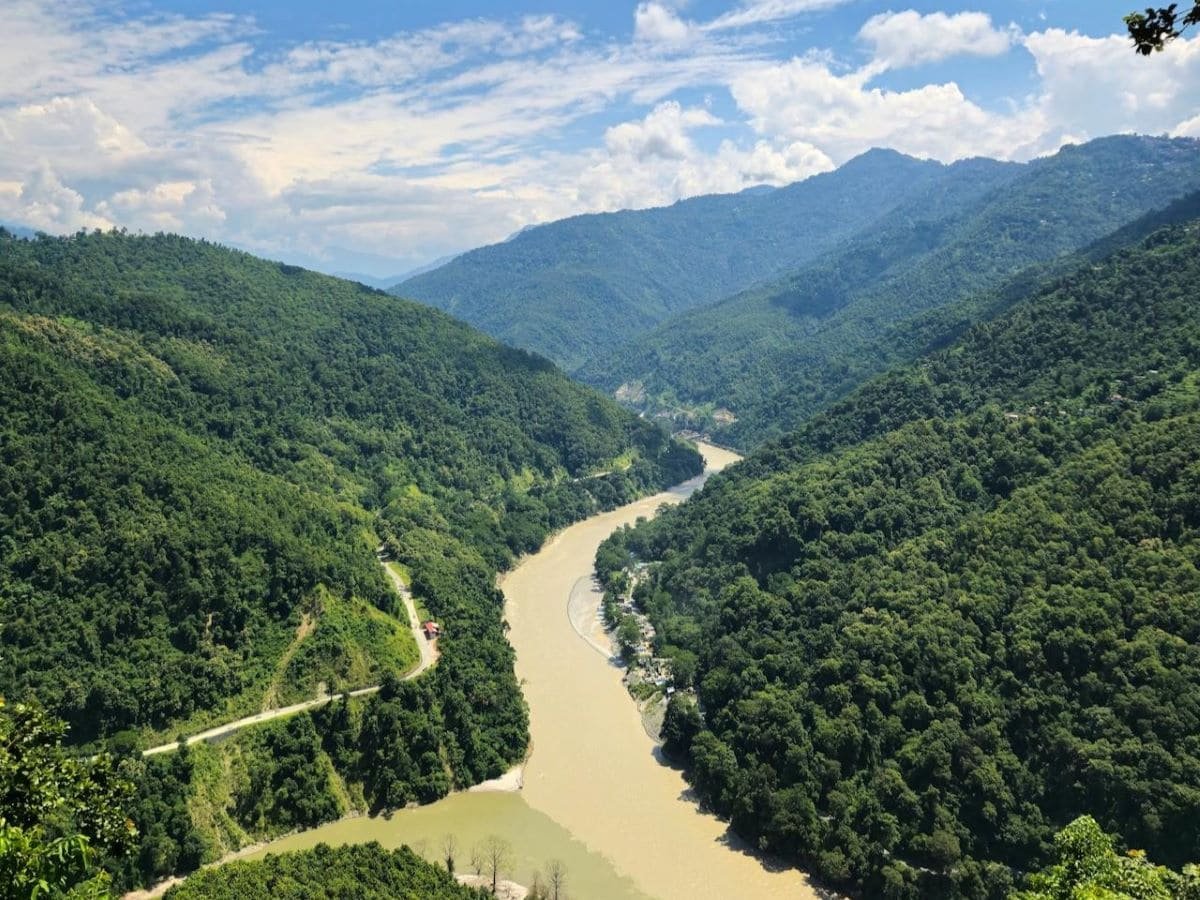
To understand the complexity of the crisis, one must look at the stark geographical and hydrological asymmetries that define the basin. The Teesta River originates in the Eastern Himalayas of Sikkim, flowing approximately 414 kilometres through Sikkim (150 km) and West Bengal (123 km) before crossing into Bangladesh (140 km), where it eventually drains into the Jamuna (Brahmaputra) River. Crucially, the river’s catchment area is heavily imbalanced, with roughly 83 per cent lying within Indian territory and only 17 per cent inside Bangladesh.
This geographical reality grants India structural superiority as the upper riparian state. Bangladesh, conversely, faces an acute external dependency ratio for water that exceeds 90 per cent, rendering it exceptionally vulnerable to upstream unilateral actions. During the lean dry season, spanning from December to May, upstream water withdrawals, primarily at India’s Gazaldoba barrage in West Bengal, severely diminish the downstream flow entering Bangladesh. This seasonal deficit directly disrupts over 100,000 hectares of arable land across five crucial northern districts in Bangladesh, driving widespread agricultural distress, food insecurity, and climate-induced migration.
Despite negotiations dating back to 1983, a formal, binding agreement remains elusive. In 2011, New Delhi and Dhaka came remarkably close to signing an interim 15-year water-sharing pact that would have allocated 42.5 per cent of the dry-season flow to India and 37.5 per cent to Bangladesh. However, the deal was abruptly derailed at the eleventh hour due to vehement opposition from West Bengal Chief Minister Mamata Banerjee. Under India’s federal constitution, water management is primarily a provincial subject, enabling subnational leaders to exercise a de facto veto over international treaties. This domestic gridlock has locked India and Bangladesh into a permanent “two-level game,” where New Delhi’s international commitments are consistently held hostage by provincial electoral equations.
Enter the Dragon: China’s Strategic Gambit
Frustrated by decades of bilateral paralysis, Bangladesh began exploring alternative mechanisms to secure its hydraulic sovereignty. This led to the formulation of the Teesta River Comprehensive Management and Restoration Project (TRCMRP), an ambitious megaproject valued at nearly $1 billion. The TRCMRP aims to comprehensively re-engineer the Teesta within Bangladeshi borders through massive dredging, river training, the construction of high embankments, and the creation of large-scale water reservoirs to store monsoon overflows for dry-season irrigation.
Recognising a prime opportunity to deepen its strategic leverage, China entered the fray, offering to fund and implement the project through its state-owned enterprises. For Beijing, the TRCMRP is a logical extension of its Belt and Road Initiative (BRI) in South Asia, aimed at establishing a permanent presence in a region historically dominated by Indian influence. For New Delhi, however, a Chinese-engineered project on the Teesta represents a red line and a profound national security vulnerability.
The geographical location of the proposed Chinese project sits uncomfortably close to the Siliguri Corridor, popularly known as the “Chicken’s Neck”. This narrow, highly strategic strip of land, measuring just 22 kilometres at its narrowest point, connects mainland India to its eight north-eastern states. The prospect of Chinese engineers, surveyors, and potentially dual-use infrastructure technologies operating mere kilometres from this vital chokepoint triggered immediate alarm bells within India’s security establishment.
To counter this strategic ingress, India shifted its approach from passive obstruction to active economic counter-manoeuvring. During Prime Minister Sheikh Hasina’s state visit to India in June 2024, New Delhi explicitly offered to send an Indian technical team to assess the TRCMRP and indicated its willingness to finance and manage the project itself. This counter-offer was a transparent attempt to “crowd out” Beijing from a highly sensitive border zone, transforming the Teesta from a bilateral ecological dispute into an active theatre of Sino-Indian major-power competition.
The Political Shockwave and the Post-2024 Reality
The strategic calculations of both New Delhi and Beijing were dramatically upended in August 2024. A massive, student-led popular uprising overthrew the regime of Sheikh Hasina, forcing her to flee to India and bringing an end to 15 years of a staunchly pro-India administration in Dhaka. The establishment of an interim government led by Nobel Laureate Muhammad Yunus marked a structural break in regional alignments.
Under the interim administration and heading into 2026, Bangladesh’s foreign policy has pivoted away from its previous perceived over-dependence on India, moving towards a hyper-pragmatic, multi-aligned stance. While Dhaka continues to demand a just resolution to the Teesta water-sharing issue from India, it has simultaneously reactivated dialogues with Beijing regarding infrastructural support. The domestic public sentiment in Bangladesh has grown increasingly critical of India’s hegemonic behaviour and its historical failure to deliver on transboundary water commitments, amplifying pressure on the Yunus administration to keep the Chinese option firmly on the table.
Furthermore, the hydro-diplomatic stakes have been magnified by the impending expiration of the 1996 Ganges Water Treaty at the end of 2026. The renewal of the Ganges Treaty is currently being negotiated against a backdrop of deep bilateral mistrust, political transition, and a worsening climate crisis that accelerates Himalayan glacial melt and alters monsoon predictability. If India fails to offer credible concessions on the Teesta and the Ganges, it risks accelerating Bangladesh’s strategic alignment with China, thereby formalising Beijing’s role as an indispensable hydro-developmental partner in the Eastern Himalayas.
Strategic Imperatives for a Sustainable Resolution
For think tanks and policymakers across South Asia, the Teesta conflict underscores the obsolescence of purely bilateral, zero-sum approaches to transboundary water management. To prevent the militarisation of the shared river basin, a fundamental shift towards collaborative, multi-layered governance is required:
- Overcoming the Subnational Veto: India’s central government must internalise that the “two-level game” carries severe geopolitical costs. New Delhi must actively incentivise West Bengal through federal compensation packages, alternative water-storage infrastructure, or modern irrigation technologies to build internal consensus for a finalised water pact.
- Embracing Hydrosocial and Basin-Wide Thinking: Rivers are complex ecosystems, not just volumetric units to be carved up by national borders. Future diplomacy must transition towards joint data-sharing, collaborative flood-forecasting, and tripartite or mini-lateral river management frameworks that optimise the ecological health of the entire Ganges-Brahmaputra-Meghna system.
- Pragmatic Infrastructure De-escalation: Bangladesh requires immense external capital as it navigates its post-LDC developmental hurdles. However, turning its river systems into a contested zone between rival giants is inherently risky. A potential solution lies in a blended consortium model or a strictly technical, non-militarised execution of the TRCMRP that respects India’s core security sensitivities regarding the Siliguri Corridor while securing Bangladesh’s developmental targets.
The Teesta River dispute has evolved far beyond its original dimensions as a localised struggle for agricultural survival. It is now a critical bellwether for the future of South Asian hydropolitics. If India remains driven by its hegemonic desires, it will shatter its neighbourhood-first policy and inevitably cede strategic space to China’s expanding economic and infrastructural machinery. For Bangladesh, the challenge lies in masterfully balancing its urgent ecological and economic needs without becoming a structural casualty of regional power rivalry. Ultimately, the waters of the Teesta must be managed not as a geopolitical weapon, but as a shared transboundary commons capable of fostering regional resilience in an era of climate disruption.
[Image Credit: MATERIA RINNOVABILE]
Aisha Ghazi is a human rights lawyer, author, and documentary filmmaker dedicated to uncovering untold histories. Her work focuses on war and conflict, socio-psychological grounds dictating violence, refugee crisis, geopolitics and history. She is the director of iResist, a human rights platform that advocates human rights through documentary, and a Solicitor of the Supreme Court of England and Wales.