The current phase of back-channel diplomatic negotiations between Washington and Tehran has reached a critical juncture, with the final disposition of Iran’s highly enriched uranium stockpile emerging as the primary obstacle to a sustainable regional settlement. Following the military operations conducted by a joint United States and Israeli coalition against major Iranian nuclear sites, a fragile truce has taken hold in Western Asia. Whilst these air strikes caused extensive structural damage to installations across the country, subsequent intelligence assessments and international oversight bodies have confirmed that Iran’s physical inventory of enriched material survived the bombardment largely intact. This situation has created an acute non-proliferation challenge, as the remaining material sits beneath the rubble of facilities that were previously under continuous international monitoring.
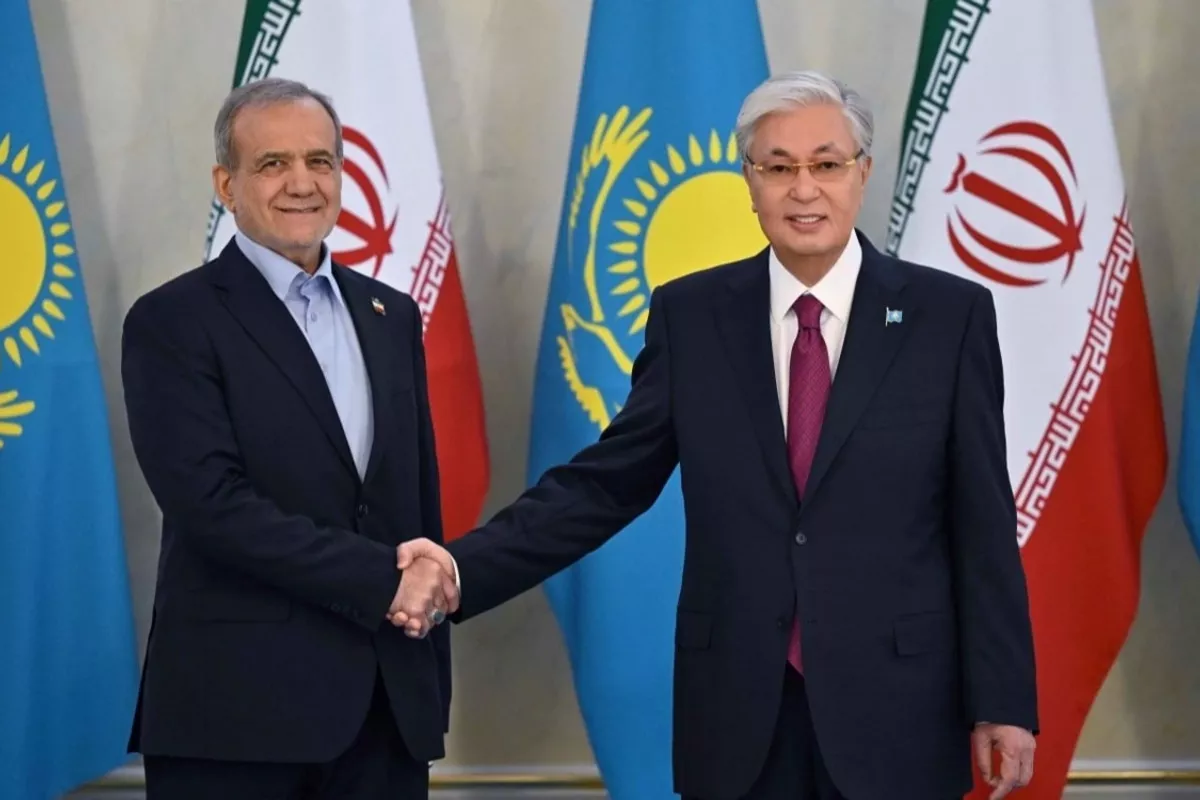
A potential solution to this high-stakes standoff became visible when the Director General of the International Atomic Energy Agency, Rafael Grossi, disclosed that the Republic of Kazakhstan had formally volunteered to accept and securely house Iran’s most sensitive nuclear materials. This diplomatic intervention by Astana comes at a moment when negotiators are working to formalise a temporary Memorandum of Understanding. The proposed agreement seeks to extend the current sixty-day cessation of hostilities, reopen vital commercial shipping lanes through the Strait of Hormuz, and establish a framework for long-term talks on regional stability. Within this context, the Central Asian nation’s proposal represents a valuable mechanism to bypass the immediate political deadlock that threatens to drag the region back into active warfare.
The Technical Impasse
At the core of the technical impasse is an inventory consisting of approximately 440 kilograms of uranium hexafluoride gas enriched to a 60 per cent purity level. Non-proliferation experts view this specific concentration with deep concern because the physics of enrichment mean that the bulk of the industrial effort required to reach weapons-grade thresholds has already been completed. This substantial quantity of highly enriched uranium represents enough fissile material to eventually produce roughly ten nuclear warheads, should it be subjected to further processing through centrifuge cascades. Beyond this highly enriched stockpile, Iran continues to hold an additional inventory of more than 9,000 kilograms of low-enriched uranium, processed to lower thresholds such as 5 per cent and 20 per cent. Consequently, whilst the recent military action significantly degraded Iran’s industrial infrastructure and centrifuge manufacturing capabilities, it did not eliminate the state’s latent capacity to execute a rapid nuclear breakout using existing materials.
Competing Political Constraints
The draft Memorandum of Understanding currently under review aims to create a sequence of reciprocal concessions to stabilise the Persian Gulf, but domestic political realities in both capitals have severely restricted the space for compromise. The administration in Washington, led by President Donald Trump and Vice-President JD Vance, maintains a firm stance that any formal agreement requires the immediate verification that the 60 per cent material has been completely removed from Iranian territory or definitively destroyed. Furthermore, the American leadership has explicitly blocked any arrangement that would place the stockpile under the direct custody of major strategic competitors such as the Russian Federation or the People’s Republic of China. Conversely, Iranian negotiators have consistently rejected demands that imply a unilateral capitulation or the unverified destruction of their sovereign scientific achievements. However, communications channelled through neutral intermediaries indicate that Tehran may be willing to consider either the systematic dilution of the material back to low enrichment levels or its physical relocation to a trusted third party, provided the process occurs under strict international supervision rather than Western dictation.
Kazakhstan’s Strategic Offer
The offer from the government of President Kassym-Jomart Tokayev resolves many of these competing diplomatic demands by capitalising on Kazakhstan’s unique institutional infrastructure and established reputation for neutrality, although its neutrality is highly questionable given its strong diplomatic and economic relations with Israel. The country already hosts the International Atomic Energy Agency Low-Enriched Uranium Bank at the Ulba Metallurgical Plant in Ust-Kamenogorsk, an ultra-secure facility operating under full international legal safeguards that serves as a precedent for managing sensitive material. Because Astana maintains productive and balanced diplomatic relations with Washington, Tehran, Moscow, and Beijing, its selection satisfies the American prerequisite to avoid handing a strategic advantage to rival global powers whilst remaining politically palatable to the leadership in Iran. Furthermore, Kazakhstan possesses significant historical credibility in the field of global disarmament, having voluntarily surrendered the world’s fourth-largest nuclear arsenal following the dissolution of the Soviet Union in the 1990s, which reassures all parties of its commitment to rigorous non-proliferation standards.
Three Pathways for the Enriched Stockpile
To operationalise this potential breakthrough, international negotiators are currently assessing three distinct pathways for handling the 440 kilograms of highly enriched uranium.
- Down-blending inside Iran: This entails mixing the 60 per cent gas with natural or depleted uranium to lower its enrichment level to below 5 per cent, thereby removing the immediate military risk without moving the material across international borders. Whilst this method circumvents the logistical hazards of transport, it would demand a highly intrusive and prolonged international inspection presence within a volatile post-conflict environment to verify compliance.
- Total, verified destruction on-site: A solution that satisfies domestic political demands in Washington but faces absolute rejection from Tehran due to profound concerns regarding national sovereignty and external coercion.
- Transfer to Kazakhstan: The Kazakh proposal involves extracting the material from its current storage points and transporting it securely to the Ulba facility, a move that successfully defuses the immediate breakout threat without forcing Iran to agree to the outright destruction of its assets.
A Multi-Stage Path to Durable Peace
To successfully implement the terms of the pending Memorandum of Understanding and transition towards a durable peace, policy planners must coordinate a multi-stage process that addresses both technical and security considerations. Initially, the International Atomic Energy Agency must secure unhindered access to the damaged installations at Natanz, Fordow, and Isfahan to conduct a thorough inventory, ensuring that no sensitive materials were diverted during or immediately after the military hostilities. Following verification, the transfer of the highly enriched stockpile to Kazakhstan can be executed as a legally binding condition of the extended ceasefire, effectively holding the material in escrow whilst wider talks proceed. Ultimately, any permanent settlement will require a verified moratorium on Iranian uranium enrichment above commercial fuel standards for a period of twenty years, coupled with the dismantling of advanced enrichment machinery, using the Kazakh facility as a permanent mechanism for compliance and dispute resolution. Through this structured approach, the international community stands to exploit a rare diplomatic window to manage Iranian nuclear ambitions.