
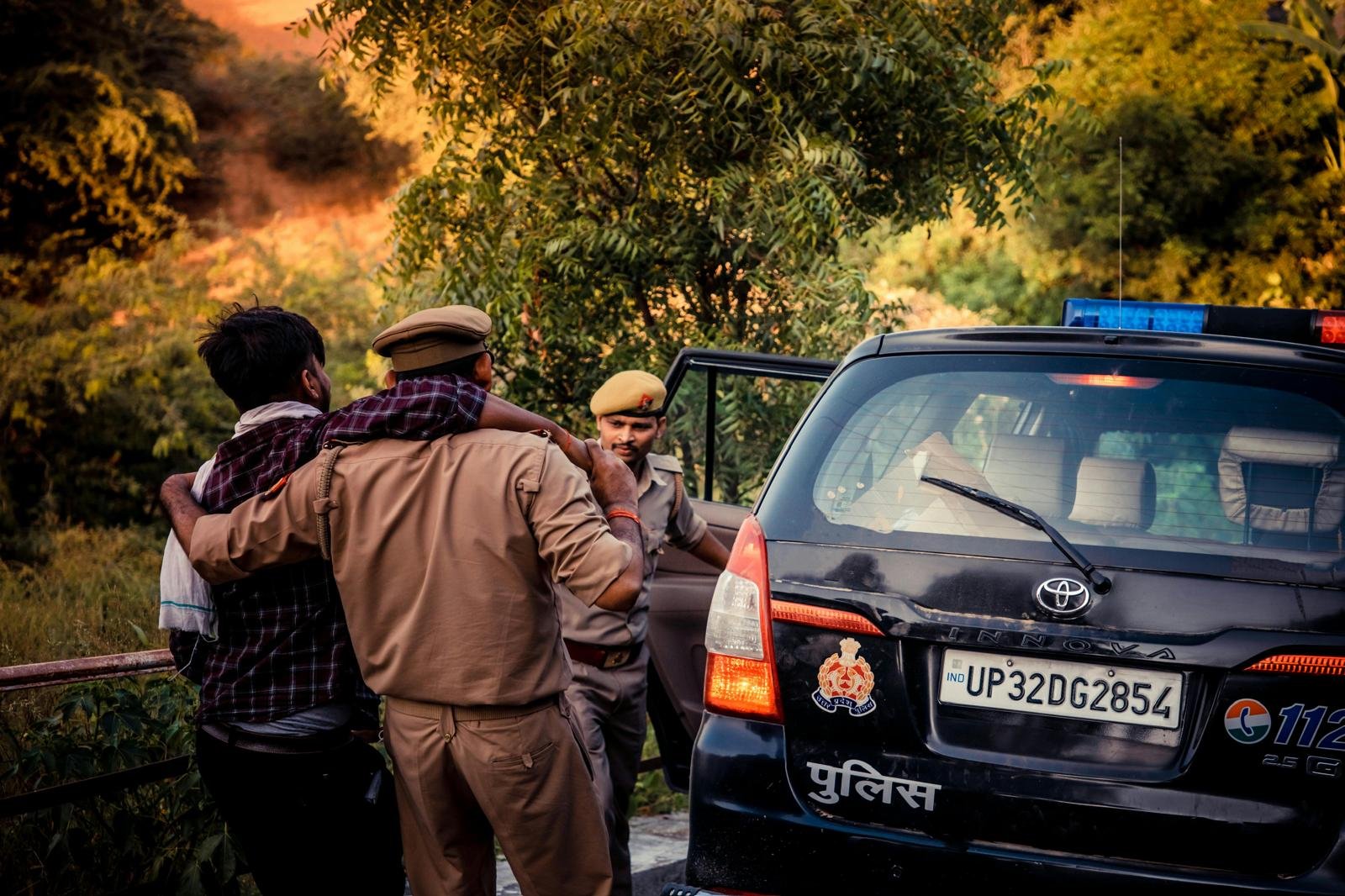
For millions of Muslims across India, the arrival of Eid ul-Adha should be a season of profound spiritual devotion, communal charity, and familial gathering. The core religious rite involves Qurbani, the ritual sacrifice of livestock to commemorate Prophet Ibrahim’s obedience to God, with the meat distributed among family, neighbours, and impoverished communities. Yet, in contemporary India, the weeks leading up to the festival have become a period of acute anxiety, economic isolation, and imminent threat of physical violence. The intersection of state-backed legislative crackdowns, aggressive cow politics, and unchecked majoritarian vigilante violence has effectively transformed this sacred tradition into a dangerous negotiation with legal instability and mob rule.
The Legal Architecture of Exclusion
Whilst cattle protection laws have existed historically in India, their contemporary application under the ruling dispensation has weaponised state machinery against the Muslim minority. Today, stringent cow protection laws are active across more than twenty Indian states. Historically, many of these regulations permitted the slaughter of certain cattle under specific guidelines, such as obtaining a fit-for-slaughter certificate for older or incapacitated animals. However, a wave of aggressive legislative amendments passed over the last decade has systematically eliminated these exemptions, drastically elevated prison sentences, and crucially, shifted the burden of proof onto the accused.
This shifting political landscape has brought unprecedented pressures even to regions previously considered relatively secure for meat traders. Following political shifts and administrative changes in states such as West Bengal, local authorities have aggressively enforced highly restrictive readings of cattle slaughter laws. The directives mandate that an animal can only be cleared for slaughter if it is over 14 years old or permanently incapacitated, requiring a bureaucratic joint certification from both a municipal chief and a government veterinarian.
The judiciary has repeatedly declined to offer blanket exemptions for the festival, effectively returning absolute enforcement power to state authorities who use it to intimidate local communities. Consequently, historic trading hubs have reported near-total paralysis. Fear of immediate legal repercussions and police harassment has driven buyers away, causing livestock prices to plummet and forcing multi-generational businesses into sudden closure.
Simultaneously, in states such as Assam, government officials have used public platforms to pressure the Muslim community, asserting that religious festivals should eventually become entirely free of animal sacrifice, a rhetoric that frames Islamic traditions as inherently incompatible with Indian society.
Vigilantism and Institutional Impunity
Where formal state legislation establishes restrictive frameworks, extra-judicial, right-wing Hindu extremist groups such as Gau Rakshaks (cow vigilantes) step in to violently enforce them. These highly organised networks operate with terrifying efficiency, patrolling national highways, intercepting supply routes, and setting up illegal checkpoints to target Muslim traders.
According to data tracked by human rights watchdogs and international bodies, including communications from United Nations Special Rapporteurs on freedom of religion or belief, hundreds of documented instances of targeted violence and killings of Muslims by vigilante groups have occurred, heavily concentrated across states such as Uttar Pradesh, Haryana, Bihar, and Madhya Pradesh.
The persistent survival of this vigilantism relies on a dynamic of institutional impunity. Despite an explicit landmark directive issued by India’s Supreme Court, which mandated that state governments establish specialised fast-track mechanisms to suppress mob lynchings, institutional compliance remains absent. Across hundreds of cases of cow-protection violence, only a minute fraction of perpetrators have faced formal legal conviction.
When vigilante assaults occur, local law enforcement agencies frequently display a pattern of institutional complicity. Police registries regularly delay the filing of First Information Reports (FIRs), or actively downgrade criminal charges to conceal the communal nature of the homicide. In multiple well-documented instances, local authorities have chosen to file counter-cases against the injured victims or the deceased’s families under state cattle protection acts. This effectively transforms the victims into criminals before the law, shielding the perpetrators behind a veneer of animal protection.
Ritualistic Violence and Economic Sabotage
The violence deployed by cow protection groups is deeply ritualistic, designed to project majoritarian dominance and inflict maximum psychological terror upon the Muslim community. Human rights monitors tracking hate crimes note that these encounters routinely involve severe physical torture, forcing victims to chant Hindu religious slogans whilst their humiliation is filmed and broadcast on social media platforms. The violence has also rapidly extended beyond cattle; transport vehicles carrying goats and sheep ahead of Eid ul-Adha are now routinely intercepted, harassed, and vandalised by mobs seeking any pretext to disrupt the festival.
The financial fallout of this persecution is catastrophic. For millions of impoverished and Pasmanda (marginalised, lower-caste) Muslims in India, the cattle trade, leather industry, and meat supply chains represent vital economic lifelines. The climate of fear has forced a massive contraction of these markets. Fearful of traversing interstate borders where they might encounter vigilante checkpoints or complicit police officers, rural livestock farmers are refusing to bring their animals to urban centres, destroying their own livelihoods to guarantee their survival.
The lived reality of India’s largest minority highlights a profound and painful gap between constitutional text and daily existence. The secular framework of the Indian Constitution explicitly guarantees freedom of conscience and the right to freely profess, practise, and propagate religion under Article 25. Yet when a community is forced to fundamentally alter its centuries-old religious practices out of survival, the promise of equal citizenship is severely compromised. The ongoing weaponisation of cow politics has successfully created an atmosphere in which a sacred holiday is approached not with a sense of peace, but with a quiet, collective hope for safety.
The Economic Paradox: Who Owns India’s Meat Industry?
In a revealing development, containers of cow meat were seized in Rajasthan during Eid, totalling 40 tonnes of packed meat. Notably, four of India’s six largest meat exporters are owned and operated by Hindus, despite operating under Muslim-sounding trade names. An investigation into the ownership structure of these companies exposes a stark contradiction at the heart of cow vigilantism.
| Company | Owner | Registered Address |
|---|---|---|
| Al-Kabeer Exports Pvt. Ltd. | Mr Satish & Mr Atul Sabharwal | 92, Jolly Makers, Chembur, Mumbai 400021 |
| Arabian Exports Pvt. Ltd. | Mr Sunil Kapoor | Russian Mansions, Overseas, Mumbai 400001 |
These facts raise serious questions about the true intent behind cow vigilantism. It is evident that the real motive behind this activism is the social and economic marginalisation of the Muslim community in India, rather than any genuine concern for animal welfare or religious sentiment.
Shanti Sharma is a human rights activist and documentary script writer whose work focuses on violence, social conflicts, and issues of justice in contemporary societies. Her writing combines field-based perspectives with critical analysis of political and social developments affecting marginalized communities. She is a research coordinator at iResist, a London based Human Rights advocacy platform.