It doesn’t take too much catastrophising to imagine a scenario where the America/Israel/Iran situation spirals rapidly downwards into a global conflict: if President Trump follows through on his threat to destroy Iran’s whole civilisation, China might see an existential threat to its energy supplies and Russia might see an opportunity to cause more mischief. India and Europe would find it difficult to avoid being drawn in and suddenly the world’s major powers are at war.
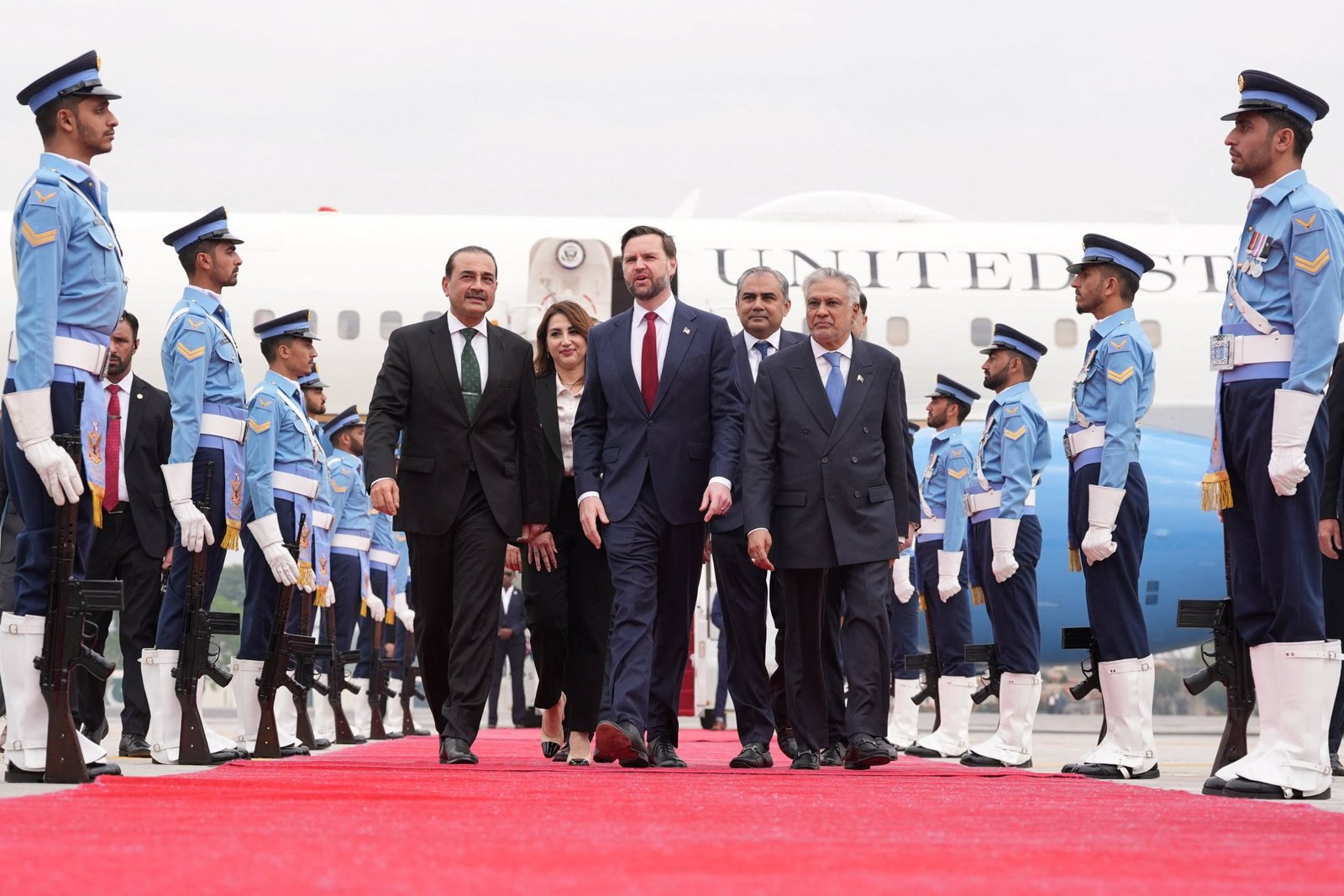
But it’s Pakistan who has stepped in and offered an opportunity to save us from this nightmare by holding and facilitating talks between the two main antagonists; talks that look extremely difficult but are necessary if we are to avoid disaster.
Why Pakistan?
Why Pakistan? After all, Oman, Qatar, Switzerland and Norway have all been involved in peace-keeping initiatives in the region over the years. But Pakistan does have a unique web of relationships in the region and this might be the main reason behind their involvement.
On the one hand, it’s trusted by Iran. Few relationships in the area are simple but, despite having 900km of border with the occasional friction, Iran and Pakistan have never been at war and, indeed, Iran was the first country to recognise Pakistan’s existence in 1947. Since 1979, Iran has had no direct diplomatic relations with America so it has actually conducted any communication through the Pakistani Embassy in Washington.
But on the other hand, the relationship with America has also been largely positive. Pakistan played a key intermediary role in the 2020 Doha Agreement between the U.S. and the Afghan Taliban and last September it struck a $500m deal to provide rare earth elements to the U.S., helping America reduce its dependence on China for these strategically important minerals. If we go back further, in 1971 it played an important role in Nixon’s famous rapprochement with China, so it has a good track record in these things.
Speaking of China, relations there are very warm, too, with the China-Pakistan Economic Corridor forging very strong economic interdependence. Also, Russia considers itself a close ally and throw in the recent defence pact with Saudi Arabia and perhaps Pakistan really does have an argument for being the best placed country to manage any negotiations between Iran and the U.S.
How Does Mediation Work?
Mediation is the art of finding agreement between parties who aren’t able to speak directly to each other. It requires a third party that is trusted (or at least tolerated) by both sides, with enough credibility to carry messages faithfully and enough influence to nudge positions without appearing to take sides.
Some of the key steps involve:
- Establishing ground rules: confidentiality, ceasefire conditions, who speaks for each side
- Separating stated positions (what each side says it wants) from underlying interests (what they actually need)
- Identifying which issues are genuinely negotiable and which are red lines
- Understanding domestic political constraints on each side
- Starting with smaller, achievable agreements to build trust and demonstrate progress
- Sequencing concessions carefully – who does what first, what’s next and so on
- Building in verification mechanisms
- Bringing in additional guarantors to make commitments credible
- Formalising any agreement in language both sides can sign
- Proposing frameworks that allow both sides to claim victory domestically
Is an agreement even possible?
Make no mistake, there is no easy solution here. After all, America wants:
- Iran to verifiably halt nuclear enrichment at sub-weapons-grade levels
- An end to Iranian support for regional proxies threatening US allies and forces
- Iran to stop supplying drones and weapons to Russia.
And on the other side, Iran wants:
- Permanent, irreversible lifting of economic sanctions
- U.S. military withdrawal from the Middle East
- Recognition of Iran’s sovereignty over the Straits of Hormuz
- Reparations for the damage already done by American and Israeli bombing.
These are not easy to reconcile!
But, of course, they are maximalist demands on both sides and if Trump can strike a deal with the Afghan Taliban, then surely he can do so with Iran?
The core challenge is going to be one of trust: each side views the other as having already broken promises – America by abandoning the JCPOA in 2018, Iran by exceeding its nuclear limits afterward. Any successful mediation has to solve this issue before it can solve the technical ones.
But if the intent is there, there is a solution to be found through the right sequencing of actions and reliable verification procedures and guarantees.
The most likely scenario
It’s difficult to see either of these regimes being very flexible even on such maximalist demands but, at the same time, neither side really wants more war. Iran has suffered a lot already but the economic impact in America is big, too, and this won’t help Trump’s chances in the mid-term elections later this year.
Which means both sides are probably finding themselves in a situation they would like to get out of, but get out of in a way where it doesn’t look like they are giving in.
So finding a solution whereby both sides win might be beyond the best mediators but Pakistan’s challenge could be easier than this: the solution doesn’t need to be a genuine win for both sides, just one they can sell to their populations as a win.
This will at least prevent it escalating to our worst-case-scenario wider conflagration and it may even keep the local fighting to a minimum, but whether it actually brings about a real peace or even ceasefire is another question altogether.
What’s in it for Pakistan?
This is not going to be a straightforward process at all. Even if it eventually succeeds, there will be many times where it will seem as though there’s no progress, there will be many times where it will seem as though it’s impossible. Patience, resilience and creativity will be needed in large amounts.
And Pakistan are taking a risk here: anti-American sentiment runs deep in the country so if it’s seen as going too far in doing America’s bidding, it could lead to a domestic backlash.
But, on the other hand, if it can pull off a positive outcome, its mediation efforts might unlock very welcome aid and investment opportunities for the country and also enable a certain amount of diplomatic rehabilitation, increasing its relevance in the region and also its position between the U.S. and China. So, a risk worth taking.
Quite apart from the upside of avoiding World War 3.
Let’s wish them well.
Simon is a world-leading negotiation skills expert, having taught hostage negotiators, senior purchasing officers for global businesses, and solicitors at some of the most prestigious law firms in the world. He is a visiting lecturer at Imperial College, University of London, and has worked extensively in the banking, oil and pharmaceutical sectors.