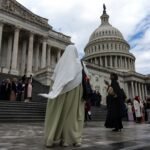

Islamophobia is no longer a marginal issue in British society. It has become an increasingly visible and deeply entrenched form of prejudice that affects millions of Muslims across the United Kingdom. Defined as hostility, fear, discrimination, or hatred directed towards Islam or Muslims, Islamophobia manifests through verbal abuse, physical violence, workplace discrimination, online harassment, biased media narratives, and institutional exclusion. In recent years, anti-Muslim hatred in Britain has reached alarming levels, driven by political polarisation, inflammatory rhetoric, misinformation, and the fallout from international events such as the ongoing genocide in Gaza.
The growing normalisation of Islamophobia presents a serious challenge to social cohesion in the UK. Muslims are not only facing rising hostility in public spaces but are also increasingly portrayed as outsiders whose loyalty, values, and place within British society are constantly called into question. Understanding how Islamophobia operates, and why it continues to rise, is essential if Britain is to confront the damaging consequences of division, fear, and racialised politics.
Media, Representation, and the Framing of Islam
The term Islamophobia entered mainstream British discourse in the late 1980s as negative attitudes towards Muslim communities became more pronounced. Over time, sections of the British press have played a significant role in shaping hostile perceptions of Islam. Newspapers such as the Daily Mail and the Daily Express have repeatedly faced criticism for publishing sensationalist or discriminatory coverage relating to Muslims. In 2017, the Turkish think-tank SETA Foundation accused parts of the British media of contributing to anti-Muslim prejudice through biased reporting and inflammatory language.
Concerns about selective media narratives persist to this day. One example is the Golders Green attack of April 2026, in which a mentally disturbed individual armed with a knife first attacked a Muslim man in Southwark before subsequently attacking two Jewish men in Golders Green, London. Critics argued that sections of the media focused almost exclusively on the Jewish victims while overlooking the fact that the first victim was Muslim and that authorities had not initially identified a racial or religious motive. For many observers, the case reflected a wider pattern in which incidents involving Muslims are frequently framed in ways that reinforce suspicion and fear, regardless of the broader context.
The Scale of Anti-Muslim Hatred
This climate of hostility has had severe real-world consequences. One of the clearest indicators of rising Islamophobia is the sharp increase in hate crimes targeting Muslims. Muslim women who wear the hijab are particularly vulnerable and are frequently subjected to harassment, intimidation, and physical assault. In 2025, Muslims accounted for 45% of all religious hate crime victims in the UK, representing a 92% increase since 2023. These figures reflect not isolated incidents, but a deepening social crisis.
Islamophobia takes many forms. Hate crimes against Muslims range from verbal abuse on public transport to violent physical attacks in the street. Online spaces have also become major platforms for anti-Muslim hatred, with social media enabling the rapid spread of conspiracy theories, racist abuse, and disinformation. Muslims also face discrimination in employment, housing, and public services, whilst institutional policies can disproportionately disadvantage Muslim communities under the guise of security or integration.
Reports to the Islamophobia Response Unit (IRU) increased by more than 300% in late 2023 following escalating violence in the Middle East. Official figures recorded 3,866 anti-Muslim hate crimes in England and Wales during 2023/24, whilst some monitoring groups reported a 377% increase in Islamophobia cases during the first months of 2026 alone. Organisations such as Tell MAMA, which monitors anti-Muslim hatred in Britain, recorded a 73% rise in physical assaults against Muslims and a 60% increase in acts of vandalism targeting Islamic institutions and property.
The impact on Muslim communities has been profound. Surveys of mosques across the UK found that nearly 90% had experienced some form of hate crime within a single year. Muslim students regularly report Islamophobic abuse in schools and universities, whilst hijab-wearing women remain among the most visibly targeted groups in British society. Many attacks occur in economically deprived suburban areas where social tensions, misinformation, and anti-immigrant rhetoric frequently intersect.
Structural and Institutional Dimensions
Media narratives remain central to the rise of Islamophobia. Polling suggests that a significant proportion of the British public believes the media fuels hostility towards Muslims through negative and unbalanced coverage. Islam is frequently associated with extremism, terrorism, or cultural incompatibility, reinforcing stereotypes that portray Muslims as a threat rather than as equal citizens. This persistent association between Islam and violence has created a climate in which suspicion towards Muslims becomes normalised.
The consequences extend beyond social hostility. Employment discrimination remains widespread, with studies from the Office for National Statistics’ Labour Force Survey indicating that individuals with traditionally Muslim names are significantly less likely to secure job interviews compared with other applicants possessing identical qualifications. Such disparities demonstrate how Islamophobia is embedded not only in public discourse but also within economic and institutional structures.
Experts also warn that the true scale of Islamophobia is likely far greater than official statistics suggest. Many victims do not report abuse due to fear, a lack of confidence in authorities, or the belief that their complaints will not be taken seriously. As a result, anti-Muslim hatred remains substantially underreported.
Political Events, Far-Right Movements, and the Southport Riots
Major political and social events have repeatedly triggered spikes in Islamophobic incidents. Following the murder of Lee Rigby in 2013 and the Manchester Arena bombing in 2017, anti-Muslim attacks surged across the country. More recently, the genocide in Gaza has intensified anti-Muslim sentiment both online and offline, with many British Muslims reporting increased hostility linked to political rhetoric surrounding the conflict.
Far-right movements and anti-migrant narratives have further accelerated this trend. Certain political figures and groups have increasingly framed Muslims and migrants as threats to British identity, culture, and security. Such rhetoric has served to legitimise prejudice that was once confined to extremist fringes, pushing anti-Muslim sentiment further into mainstream political discourse.
The Southport riots of 2024 demonstrated how rapidly misinformation can translate into violence. Following the tragic stabbing attack against a group of young girls in Southport, false claims spread online alleging that the attacker was a Muslim asylum seeker. These rumours were exacerbated by far-right personalities with large online followings, including Tommy Robinson, Paul Golding, and Lawrence Fox. Although authorities swiftly disproved the rumours, the misinformation ignited widespread civil unrest. Crowds gathered outside Southport Mosque chanting anti-Muslim slogans, whilst clashes with police escalated into nationwide disorder.
In the days that followed, mosques were vandalised, Muslim communities were subjected to threats, and attacks against ethnic minorities increased across the country. Among the most serious incidents were a failed petrol bombing of a mosque in Newtownards and an attempted arson attack on a hotel housing migrants in Doncaster. These events exposed the dangerous consequences of online disinformation, inflammatory rhetoric, and unchecked hatred.
“Within hours of the initial incident, a fabricated narrative about ‘Ali Al Shakati’ — a completely invented name designed to suggest Muslim involvement — achieved 27 million impressions. Shortly afterwards, far-right groups attacked the Southport mosque, with participants explicitly referencing the false social media claims as justification.”
Marc Owen Jones (PhD), written evidence submitted to a British Parliamentary Committee on Social Media, Misinformation and Harmful Algorithms
The Path Forward
Addressing Islamophobia requires more than symbolic condemnation. It demands a serious and sustained commitment from government, media institutions, educators, and civil society. Balanced and accurate representation of Muslims in the media is essential to challenging harmful stereotypes. Stronger hate crime legislation and more effective enforcement are also necessary to ensure that perpetrators are held to account.
Education must play a central role in dismantling prejudice by encouraging critical thinking, challenging misinformation, and promoting understanding between communities. Britain cannot claim to be a tolerant and inclusive society whilst millions of Muslims continue to live under the shadow of fear, suspicion, and discrimination.
The rise of Islamophobia is not only a threat to British Muslims; it is a threat to the social fabric of the United Kingdom itself. Combating it requires honesty, accountability, and a collective rejection of the politics of division. Only through genuine understanding and equal treatment can Britain move towards a society in which people of all faiths and backgrounds are able to live with dignity, security, and mutual respect.
Policy Recommendations
Media Accountability and Regulatory Reform
Given that selective framing and sensationalist headlines play a central role in normalising prejudice, media regulators must hold publishers to a higher standard of accuracy and fairness.
- Strengthen IMPRESS and IPSO Codes: Independent press regulators should update their editors’ codes of practice to include specific guidelines on reporting on religious and minority communities. This must include stricter penalties for systemic, inaccurate, or inflammatory reporting that targets Muslims.
- Establish a Media Diversity and Accuracy Fund: The Department for Culture, Media and Sport (DCMS) should support independent journalism initiatives that promote balanced, nuanced reporting on British Muslim communities, ensuring diverse voices are represented in mainstream newsrooms.
Combating Digital Disinformation and Online Harms
As demonstrated by the Southport riots, online misinformation can rapidly translate into offline violence.
- Strict Enforcement of the Online Safety Act: Ofcom must utilise its powers under the Online Safety Act to hold social media companies financially accountable where their algorithms actively promote, amplify, or monetise anti-Muslim disinformation, conspiracy theories, and far-right hate speech.
- Rapid-Response Fact-Checking Units: A coordinated task force should be established between the Home Office, local police forces, and independent fact-checkers to counter viral, racially or religiously motivated hoaxes in real time during periods of acute national or community tension.
Institutional Equity and Workplace Protections
Addressing structural Islamophobia requires dismantling the economic barriers that disproportionately disadvantage qualified Muslim job applicants.
- Mandatory Blind Recruitment Practices: The Department for Business and Trade should mandate name-blind recruitment processes for all public sector roles and large private enterprises (250+ employees) to eliminate unconscious bias and name-based discrimination during the initial hiring phases.
- Workplace Equality Standardisations: Specific protections against religious discrimination, including provisions for religious dress (such as the hijab) and prayer space accommodations, should be integrated into standard workplace diversity, equity, and inclusion (DEI) compliance audits.
Educational and Local Government Integration
Dismantling prejudice requires proactive, long-term community resilience built through the education system.
- Reframing the National Curriculum: The Department for Education should integrate media literacy and critical digital thinking into the core Citizenship and PSHE (Personal, Social, Health and Economic) curricula. This will empower young people to identify online manipulation and far-right radicalisation tactics.
- Localised Social Cohesion Funds: Funding should be decentralised to local councils to establish regional interfaith networks, community-led dialogue forums, and cultural exchange programmes, particularly in suburban and historically marginalised areas where anti-immigrant and Islamophobic rhetoric frequently intersect.