
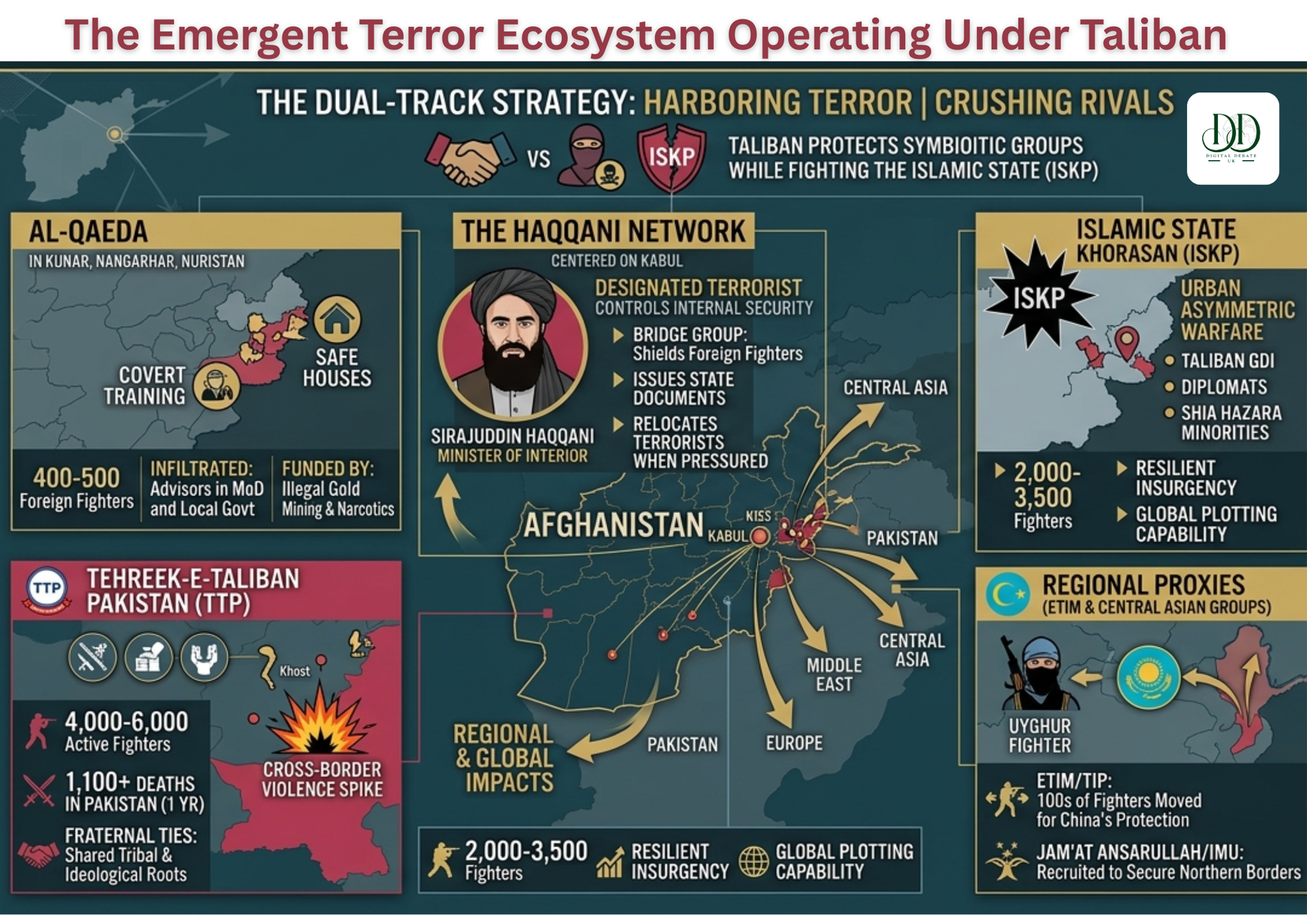
- The Core Reality: Despite promises in the 2020 Doha Agreement, Afghanistan has re-emerged as a complex sanctuary for transnational terror networks. The Taliban employ a dual-track strategy: ruthlessly crushing internal rivals while harbouring, tolerating, or collaborating with regional and global militant groups.
- Strategic Shift: In response to sustained counterterrorism pressure, many militant organisations have shifted from large, visible training infrastructures towards decentralised operations characterised by covert integration, political patronage, and institutional penetration.
Key Threat Actors & Operational Realities
1. Al-Qaeda: Infiltration and Rebuilding
- Operational Footprint: Operates covert training cells and safe houses across Kunar, Nangarhar, and Nuristan provinces.
- Personnel & Power: Core leadership is backed by an estimated 400 to 500 foreign fighters. Notably, Al-Qaeda members hold active advisory roles within the Taliban’s Ministries of Defense and local governance.
- Financing: Funded through illegal gold mining operations in Badakhshan and established narcotics trafficking routes.
2. The Haqqani Network: The State-Terror Nexus
- Institutional Shield: Network leader Sirajuddin Haqqani serves as the Taliban’s Minister of Interior. This places domestic intelligence, security forces, and passport issuance directly under the control of a designated global terrorist.
- Foreign Fighter Protection: The network acts as the primary protector for Central Asian jihadist entities, issuing them official state documentation and relocating them when international pressure spikes.
3. Tehreek-e-Taliban Pakistan (TTP): Border Destabilisation
- Manpower: Holds an estimated armed strength of 4,000 to 6,000 active fighters in eastern provinces like Khost, Paktika, and Nangarhar, Afghanistan.
- Regional Impact: Safe havens have triggered a massive spike in cross-border violence, resulting in over 1,100 terrorism-related deaths in Pakistan within a single year.
- Taliban Complicity: Rooted in shared tribal and ideological ties, the Afghan Taliban refuse to dismantle the TTP, choosing instead to play a “geographic shell game” by moving fighters further inland to western provinces like Baghlan or Takhar.
4. Islamic State Khorasan Province (ISKP): The Global Insurgency
- Internal Threat: Acts as the Taliban’s most lethal internal adversary, maintaining a force of 2,000 to 3,500 fighters despite brutal crackdowns by the Taliban’s intelligence agency (GDI).
- Tactical Evolution: Shifted from holding physical territory to asymmetric urban warfare, primarily targeting Taliban security, foreign diplomats, and Shia Hazara minorities.
- External Projection: Features a highly sophisticated multilingual media apparatus that actively recruits across Central Asia and has successfully orchestrated external terrorist plots beyond Afghanistan’s borders.
5. Regional Proxies (ETIM & Central Asian Groups)
- East Turkestan Islamic Movement (ETIM/TIP): Composed of several hundred Uyghur militants targeting Chinese interests; the Taliban manage China’s diplomatic pressure by shifting these fighters from the border into central/northern Afghanistan.
- Central Asian Factions: Groups like Jamaat Ansarullah and the Islamic Movement of Uzbekistan are actively utilized by local Taliban commanders to secure northern borders, projecting instability into Tajikistan and Uzbekistan.